Gear
Double-end bag vs speed bag for home
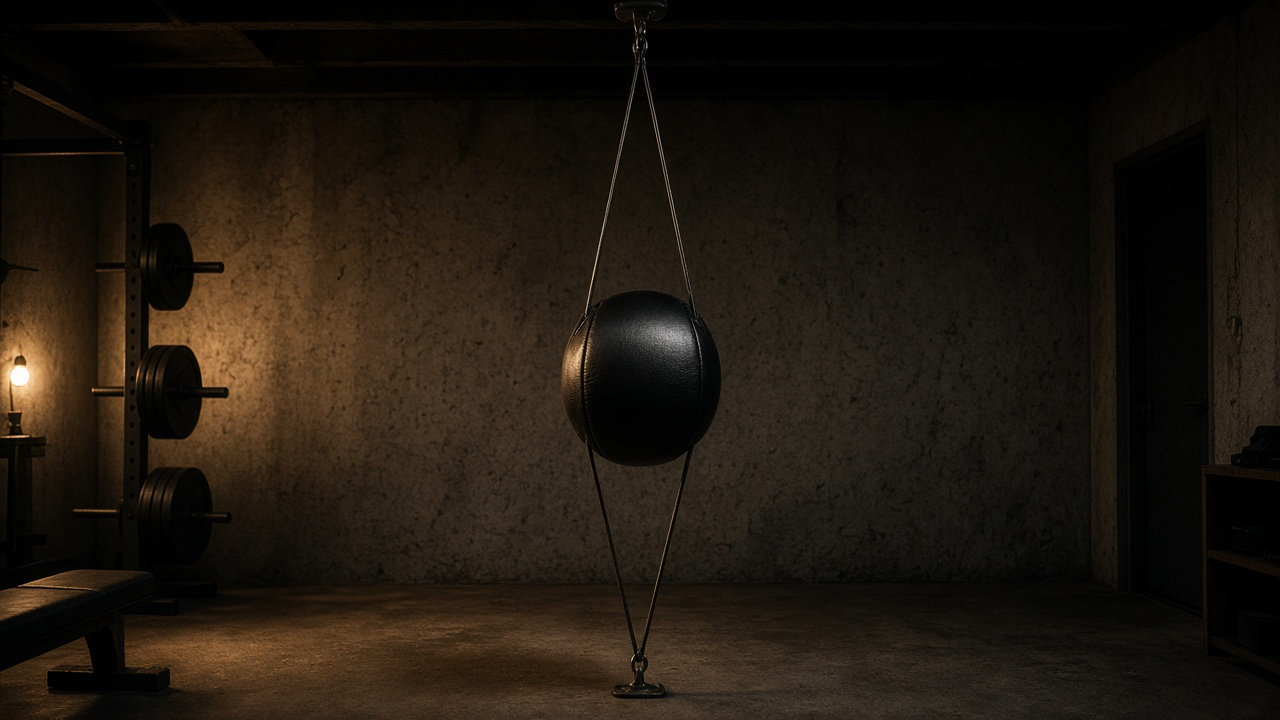
A speed bag and a double-end bag are not heavy bags, and neither one is required to start home bag work. The starting-kit guide treats extra bags and specialized gadgets as something you can skip at first. This page explains how TITLE and Everlast describe the two pieces of equipment, and what their own setup instructions require. It does not rank brands, invent prices, or tell you which bag is “better.”
This is not a product review and not medical advice. Follow the manual that comes with the bag, platform, or stand you actually buy. Those numbers and bolt sizes belong to those products. This site will not invent a wall, joist, or ceiling rating for your house. USA Boxing requires that sparring be supervised by a certified coach; nothing here is a license to spar at home.
What a speed bag is for
A speed bag is a small bag that hangs from a swivel under a rigid platform and rebounds off that platform. In TITLE Boxing’s benefits article, the work is described as a rhythm: the movement of the hands, the sound of the bag rebounding, and keeping that successive movement going. Used correctly, TITLE says, it also encourages you to keep your hands up and alternating, and — if you stand close enough that the bag is coming in only inches from your face — it can help you stay used to an object moving toward you without flinching. TITLE also notes that it can develop the shoulders, and that the speed bag “should not be the focal point of any boxer’s workout.”
If you are just beginning, TITLE’s buying guide says you may want to start with a larger bag. The smaller the bag, the faster it moves, and the harder it is to hit and control. A larger bag, in that same article, requires more force to keep moving and is presented as a more substantial target. This site will not invent sizes or brand comparisons on top of that.
What a double-end bag is for
A double-end bag is a lighter bag held in the air by cords or bungees attached above and below it, so it can rebound toward you when you hit it. TITLE’s “Make it a Double” article states the intended purpose as improving hand speed and timing, with the focus on volume punching — not hitting it hard “like it’s a heavy bag,” and not tapping it so lightly that the cords do all the work.
That article also tells you to stay in a boxing stance (lead shoulder forward, rear shoulder back) rather than squaring up to reach the bag more easily with the rear hand; to time punches, feel the bag’s rhythm, and judge distance as it travels; and to treat the rebound as a reason to keep your hands up or your head moving. TITLE wants the bag kept in motion: “Never let the bag come to a complete standstill.” Combinations are encouraged, but they should be accurate. For which combinations to learn first, use the official lists in the beginner combos guide, not a longer string invented for this bag.
How tight the cords are changes the work. In TITLE’s hanging-bags article, tighter rubber cords shorten the bag’s movement and, in TITLE’s words, encourage greater intensity, faster hands, and faster reactions. Looser cords make the bag slower, with wider, more sweeping motion, and reduce the pace you are forced to work at. Adjust from the manual for your bag; this page will not invent a tension setting.
How they mount, and why that matters at home
A speed bag needs a platform, or a stand that includes one. TITLE’s assembly article for its Forged Steel Adjustable Pro Speed Bag Platform is model-specific, but it is a clear example of what wall-mounting involves. TITLE gives an average height of 6 feet (72 inches) for hanging that wooden platform so the bag sits at what it calls an ideal height for average adults; the platform itself then adjusts vertically 21 inches. For a wood-stud wall, TITLE says to attach two horizontal brace boards into the studs first, then the wall braces; masonry walls use the expanding anchors included with that platform. Assembly and hanging take at least two people, height adjustments take two adults, and TITLE says to re-check the spring-loaded bolts before every use because vibration can loosen them. TITLE also recommends hand wraps and well-padded gloves every time you use the speed bag, and says to consult a physician before beginning an exercise program.
Everlast’s 4813 Heavy Bag/Speed Bag Stand is a different product: a freestanding frame that holds both a heavy bag and a speed bag. Its owner’s manual, already cited in the stands and mounting safety guide, recommends an area at least 4 feet by 6 feet and a ceiling at least 7 feet 3 inches high. For the speed-bag arm on that stand, the manual says to adjust the pop pin “so that speed bag will hang at eye level,” then tighten the knob bolt and pop pin, and to confirm before each use that both bags are hanging correctly. Those measurements belong to the 4813 family of stands, not to every stand or every platform.
The height cues are not identical. TITLE’s platform article talks about hanging the board at about 6 feet for average adults; Everlast’s 4813 manual talks about the bag hanging at eye level. Use the wording in the manual for the hardware you have, and do not treat either figure as a universal building measurement.
A standard double-end bag, TITLE’s home-gym article says, requires mounting into a ceiling, “which makes them impractical for most home gym set-ups.” If you cannot mount into a ceiling — TITLE lists apartments, rentals, or ceilings you cannot attach to — that article says to focus on freestanding equipment. If you do mount a double-end bag, use the anchors and brackets specified for that bag. Do not improvise from a table leg, a door handle, or a piece of furniture. For hanging a heavy bag instead, or choosing a freestanding heavy bag, see how to choose a heavy bag for home and the mounting guide linked above.
Do you need either one to start?
No. Shadowboxing, a jump rope, and a heavy bag you can set up safely cover the work in our free home workouts and the starting guides. TITLE itself says the speed bag should not be the focal point of a workout. If you add one of these bags later, keep the stance and basic punches in place, wrap your hands, and use gloves as the platform or bag manual requires. A double-end bag or a speed bag is a supplement, not a replacement for a bag you can hit with straight punches while you still have room to step.
Sources
- Speed Equals Power — The Benefits of the Speed Bag — TITLE Boxing. Rhythm of hands and rebound; hands kept up and alternating; close-range work and the blink reflex; shoulders; the speed bag should not be the focal point of a workout.
- Buying the Right Speed Bag — TITLE Boxing. Larger bags as a starting point for beginners; smaller bags move faster and are harder to control.
- How to Assemble the TITLE Forged Steel Adjustable Pro Speed Bag Platform — TITLE Boxing. Model-specific setup: 6-foot average platform height, 21-inch vertical adjustment, brace boards into wood studs, two-person assembly and height changes, pre-use bolt checks, wraps and well-padded gloves, physician clearance.
- Make it a Double — TITLE Boxing. Double-end bag purpose (hand speed and timing, volume punching); do not hit it like a heavy bag; stay in stance; head movement, distance, and keeping the bag moving.
- There’s More to Punching Bags than Punching — TITLE Boxing. Tighter double-end cords shorten the movement and raise the pace; looser cords widen and slow it.
- How To Create a Complete Home Boxing Gym — TITLE Boxing. Standard double-end bags require a ceiling mount and, in TITLE’s words, are impractical for most home gym set-ups; apartments, rentals, or unmountable ceilings should focus on freestanding equipment.
- 4813 Heavy Bag/Speed Bag Stand Owner’s Manual — Everlast. At least a 4×6 ft area and a 7 ft 3 in ceiling; adjust the speed-bag arm so the bag hangs at eye level; confirm both bags are hanging correctly before each use. Linked from Everlast Canada’s product-manuals page.
- USA Boxing Informational Guide (updated July 2025). Sparring must be supervised by a USA Boxing-certified coach.